The Paradox of Reducing Support Density
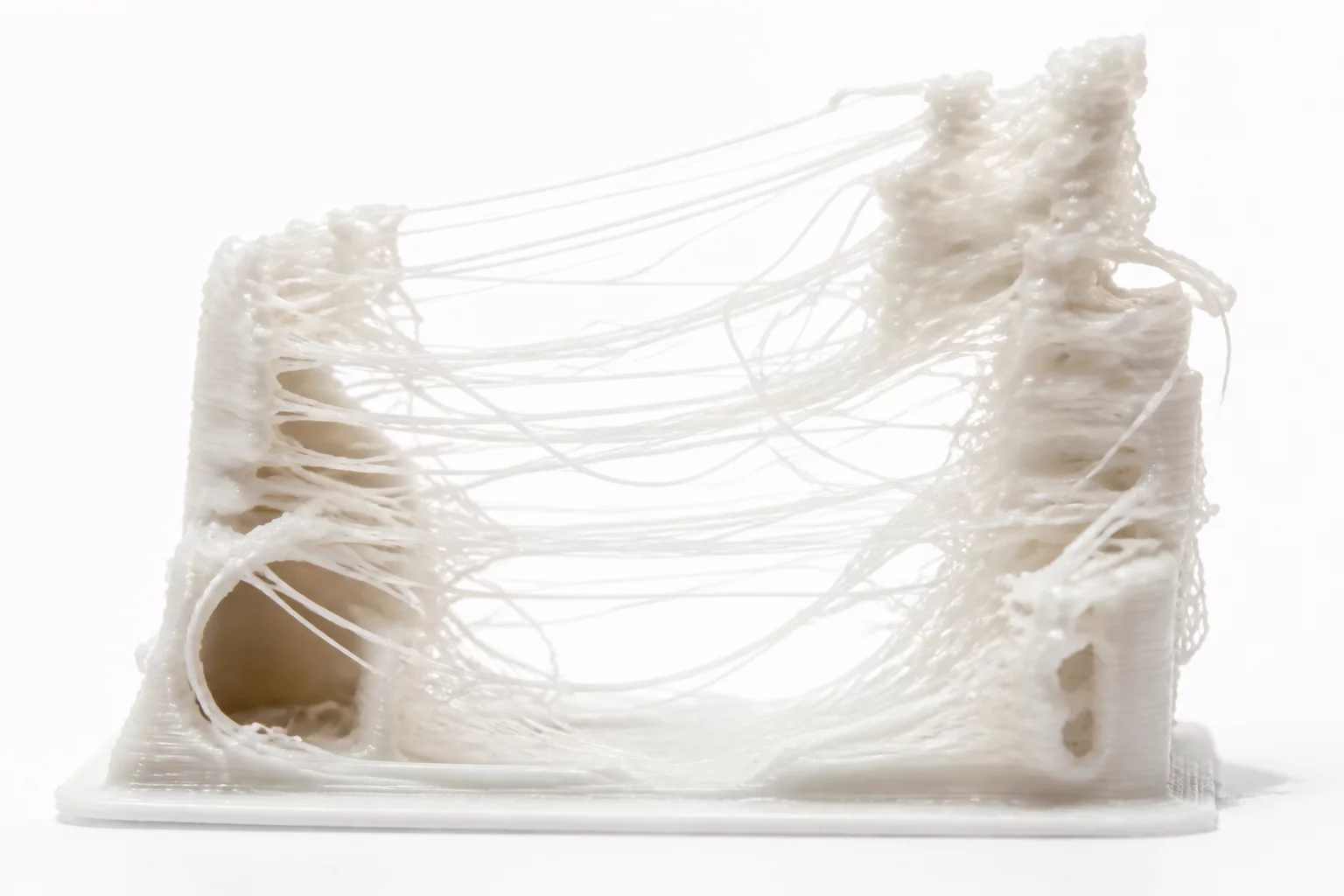
When aiming to optimize print duration and material consumption, slicer operators often reduce support density or widen support spacing. In this Cura test case, decreasing the overhang support coverage below critical thresholds produced severe 3D print support problems. Without an unyielding foundation, the molten extrusion bridges sagged into open air, creating extensive stringing and loop formation beneath horizontal bridges.
Rather than yielding a fast, clean release, the unsupported filament strands fused haphazardly at arbitrary contact points. The resulting support surface quality degraded substantially, turning what was anticipated to be a five-minute removal job into a painstaking mechanical cleanup session with rotary burrs, chisels, and precision sanding blocks.
Interface Deflection and Bridging Inaccuracies
Analysis of the physical cross-section highlights several key physical phenomena that occur when interface support lines are positioned too far apart:
- Inadequate interface support density causes molten plastic to droop between support grids, creating irregular downward teardrops.
- Secondary perimeters lose spatial reference, leading to delamination and dimensional inaccuracies across mating surfaces.
- High post-processing labor hours completely negate the nominal machine time saved during extrusion.
Comparative Findings and Strategic Adjustments
When conducting our PrusaSlicer support outcome review and comparative Cura benchmarks, we established that a minimum interface roof density of 35% to 45% is vital for flat overhangs. Utilizing dense interfaces on top of a lightweight tree or sparse rectilinear trunk maintains rapid print cycles while guaranteeing a crisp, planar bottom finish.
Ultimately, cutting support volume blindly creates more downstream friction than it prevents. By tuning roof pattern density and calibrating vertical Z-offset separation to exactly one layer height, technicians eliminate sagging plastic while keeping detachment effortless.
Discussion & Peer Findings
0 RemarksThis could be your first comment. Share your laboratory observation below.
Leave Laboratory Observation