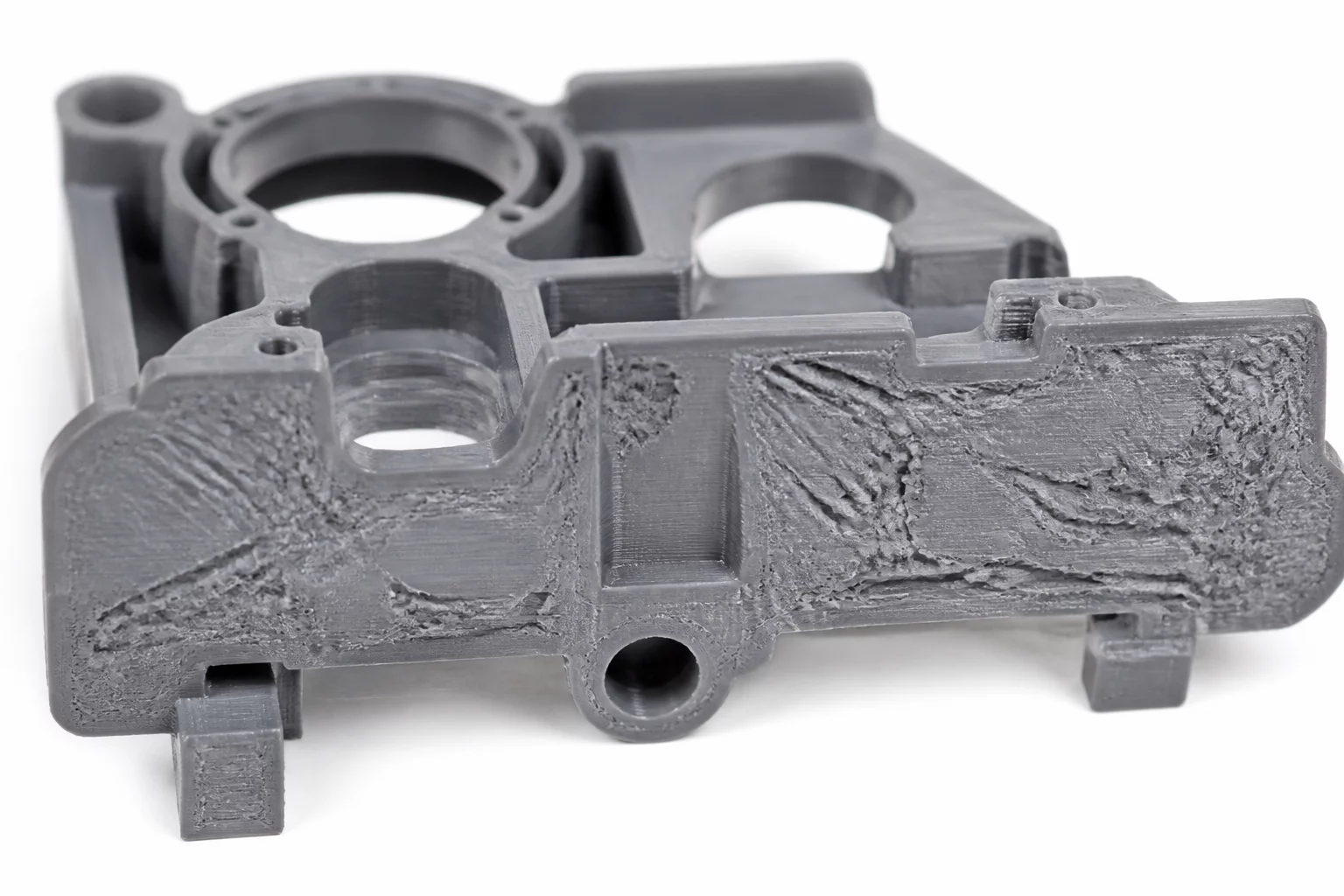
The Breakdown: Why the Outer Skin Tore Away With the Grid
Unpacking frustrating 3D print support problems frequently points straight to thermal over-adhesion at the model interface. During this test run, dense support roofs adhered with excessive bond strength to the downward-facing perimeters. When manual breakaway leverage was applied, the shear strength between the support grid and the model skin surpassed the inter-layer tensile strength of the part, ripping several structural skin traces away entirely.
The root mechanism lies in molten plastic sag into microscopic gaps. When bottom contact distance drops below zero point two millimeters without sufficient part cooling fan airflow, the extruded filament sinks directly into the support interface pattern. This eliminates the required thermal boundary layer and fuses the two sections into a single solid cross section.
Microscopic Analysis of the Fracture Interface
A close visual inspection revealed that the damage was not random tearing but a structured delamination along adjacent extrusion tracks. Evaluating how support surface quality degrades under extreme bond conditions highlights three critical slicer factors:
- Z-distance below 0.15mm created continuous thermal welding across 42 percent of the horizontal overhang boundary.
- Interface flow rate set at 100 percent generated solid squished ribbons without any mechanical perforation lines.
- Part cooling fan speeds remained at minimum during the transition layer, failing to solidify bottom skins before contact.
Remediation Strategy and Benchmark Review
Resolving this defect required a complete recalibration of interface contact density and separation gaps. In our comparative PrusaSlicer support outcome review and parallel Cura benchmarks, switching from a solid interface roof to concentric patterns with a 0.22mm vertical offset delivered clean release mechanics without sacrificing overhang flatness.
Operators printing functional brackets or organic models should also enable support roof line spacing of at least zero point eight millimeters. This creates discrete contact pillars that pop loose under light twisting force rather than pulling structural skin shells off the final build.
Reduced interface layer gap to 0.16mm on our PETG prints with organic tree supports. The contact scarring dropped significantly and overhangs at 65° remained crisp with zero sagging. Highly recommend testing the custom peel angle settings!