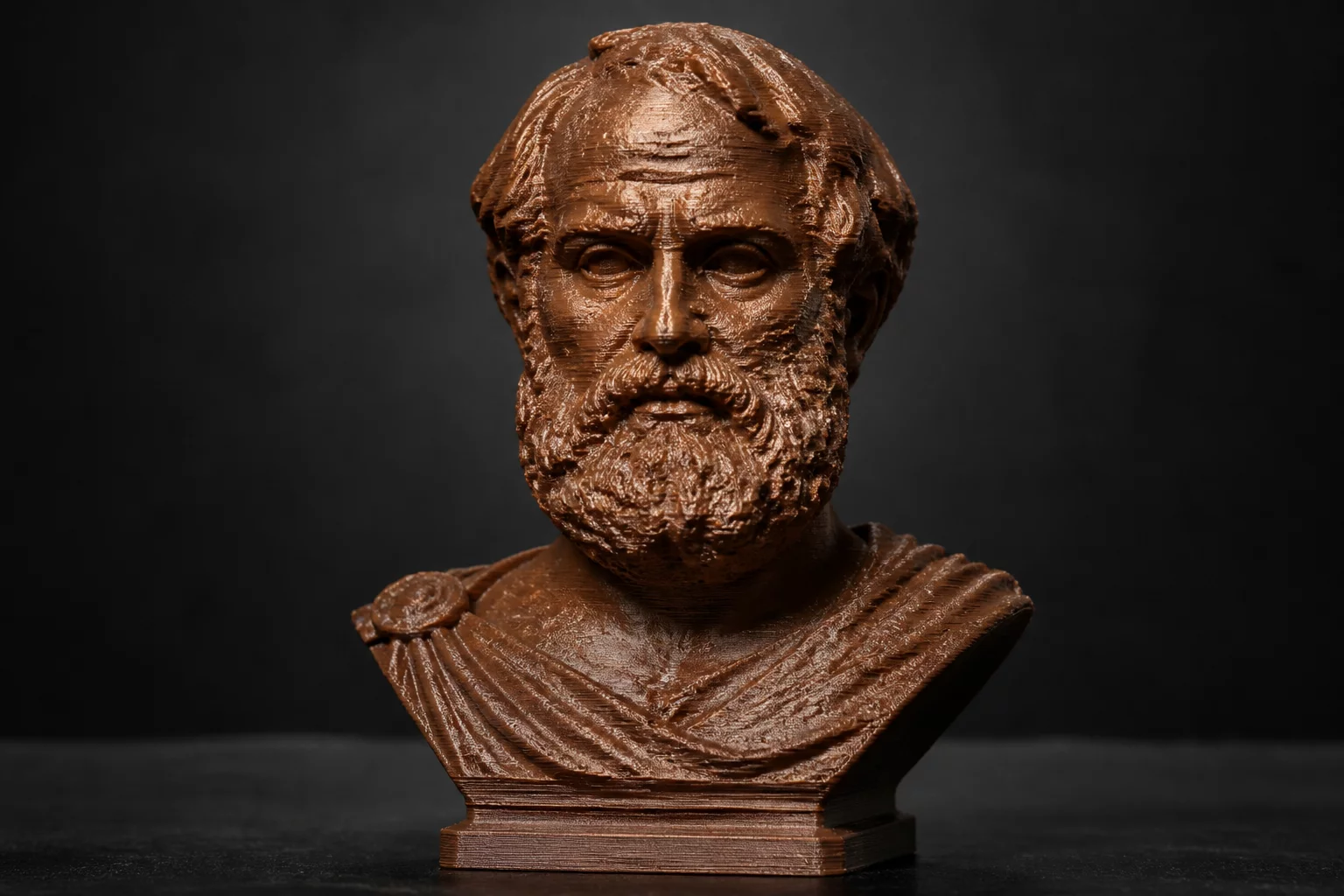
The Strategic Error of Inverting Critical Presentation Relief
Slicer automated layout features frequently optimize model positioning purely for build stability and minimal support column height. In this case study, a decorative sculpted bust was placed face-down toward the build plate to decrease printing time by twenty-two percent. While the sliced preview indicated uninterrupted support generation, real-world extrusion dynamics behaved very differently. Placing complex facial features downward directly subjected the primary visual surface to the thermal turbulence of bridging strands deposited across an unbonded interface grid. Such 3D print support problems almost always arise when speed metrics supersede aesthetic geometry considerations.
Molten polymer laid upon sacrificial support structures lacks the steady planar compression provided by solid underlying layers. As the nozzle extruded outer perimeters across the zigzag support roof, thermal shrinkage caused individual filament tracks to bow downward into the interface gap. Comparing these physical results against our PrusaSlicer support outcome review demonstrates that no interface pattern can prevent micro-sagging across shallow facial contours when overhang angles exceed fifty-five degrees downward.
Mechanical Extraction Damage and Surface Pitting
Support removal proved exceptionally arduous because the intricate contours of the nose, eyelids, and lips acted as mechanical interlocks around the solidified support interface. Separating the support roof with flush cutters pulled away parts of the outer shell perimeters, leaving deep craters and torn filament roots across the cheekbones. The resulting finish showed a complete degradation of support surface quality, rendering the printed part unusable for display without aggressive filling and sanding.
- Downward orientation expanded the contact interface across forty-two square centimeters of primary aesthetic contours.
- The 0.2 mm vertical contact distance failed to prevent thermal welding on steep curvature points.
- Post-processing labor increased by ninety minutes of scraping and wet-sanding that still failed to restore clean facial contours.
Corrective Tilt and Selective Support Painting
A subsequent test rotated the identical 3D model forty-five degrees backward, reorienting the primary facial contours toward the cooling fan discharge and away from the bed. This tilt shifted all necessary support generation to the posterior neck and under the hair boundary. While this adjustment introduced twelve additional grams of support material, the visible face completed with clean perimeter stacking and sharp, flawless micro-details.
When delicate cosmetic features cannot avoid overhangs completely, operators should employ manual support blockers and tree support branches configured with minimal interface touchpoints. Protecting the focal aesthetic plane must always remain the governing priority during print orientation planning.
We made this precise mistake on a batch of display figurines. Tilting thirty degrees backward and enabling concentric interface roofs helped keep the contact surfaces clean, though manual support painting was still mandatory to protect chin undercuts.