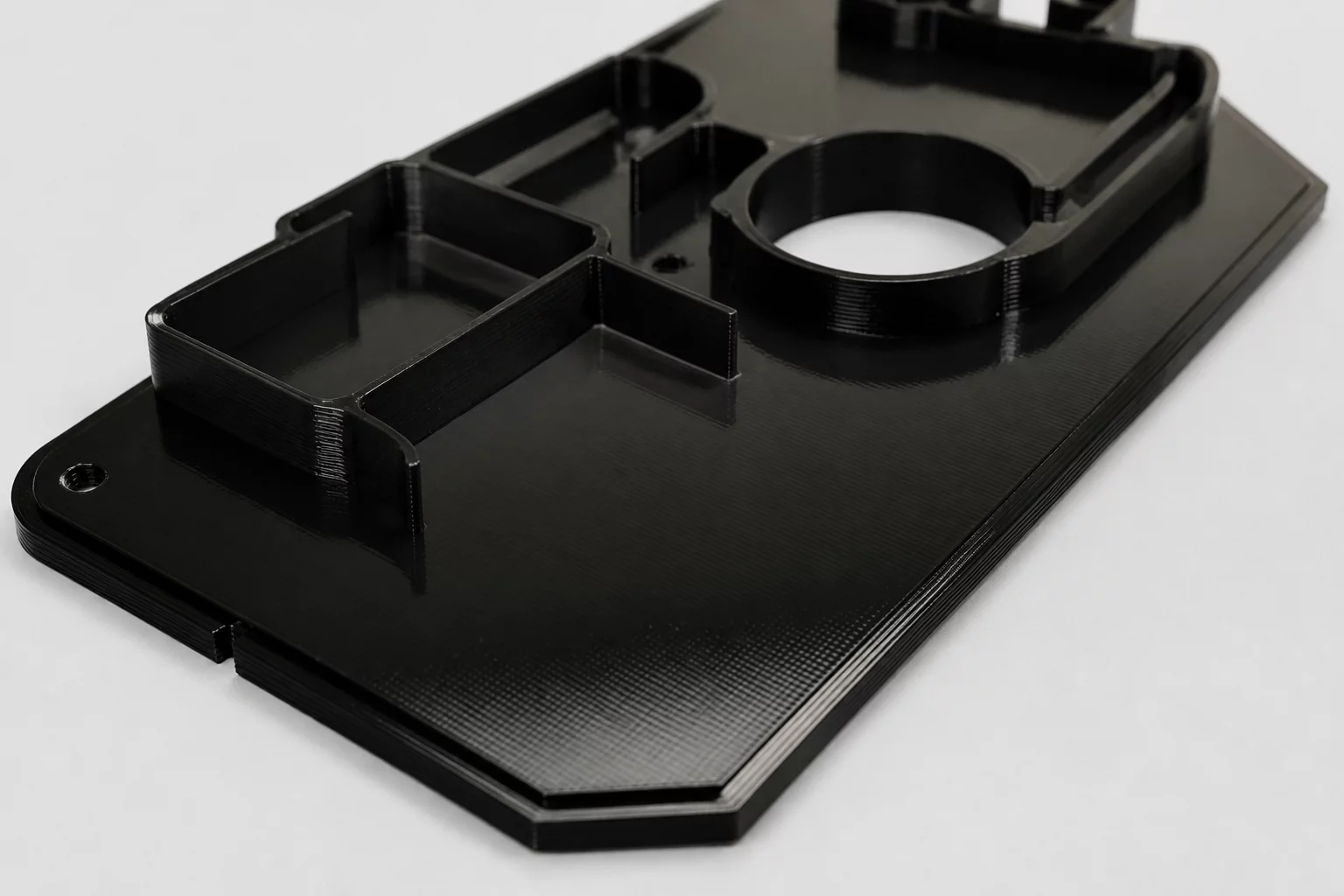
The Physics of Bottom Surface Formation
Achieving a pristine finish on downward-facing features requires balancing the mechanical squish of the initial bead against the thermal resistance of underlying support lattices. When molten polymer exits the nozzle onto bare support columns, surface tension pulls the filament into rounded cylinders rather than planar bands. This mismatch creates the dreaded scalloped texture commonly found on supported overhangs.
Standard build plate calibration resolves first-layer adhesion against glass or textured PEI sheets, but unsupported downward geometry relies entirely on the precise thermal boundary layer formed across support interfaces. By optimizing the Z-distance offset to match exactly one uncompressed layer height, plastic strands settle flat without fusing into the sacrificial scaffolding.
Essential Slicer Tuning Parameters
Proper slicer configuration prevents both aggressive fusing and premature drooping across broad horizontal spans. Adjust the following critical settings before initiating high-detail prints:
- Set interface Z-gap between 0.16mm and 0.22mm depending on polymer viscosity and cooling efficiency.
- Increase interface layer density to 90% or 100% using concentric or rectilinear patterns for uniform support decking.
- Enable independent support fan speed overrides at 100% during the critical first model layer directly above the interface.
Post-Processing and Surface Inspection
Once cooling reaches ambient temperature, interface structures peel away cleanly in a single sheet without requiring flush cutters or solvent baths. Inspect the resulting downward skin with a profilometer or oblique lighting to verify continuous line fusion and the absence of sagging filament loops.
For challenging geometries requiring airtight dimensional tolerances, pairing a soluble interface material like PVA with rigid main filaments yields near-injection-molded surface finishes across zero-gap interfaces.
Reduced interface layer gap to 0.16mm on our PETG prints with organic tree supports. The contact scarring dropped significantly and overhangs at 65° remained crisp with zero sagging. Highly recommend testing the custom peel angle settings!