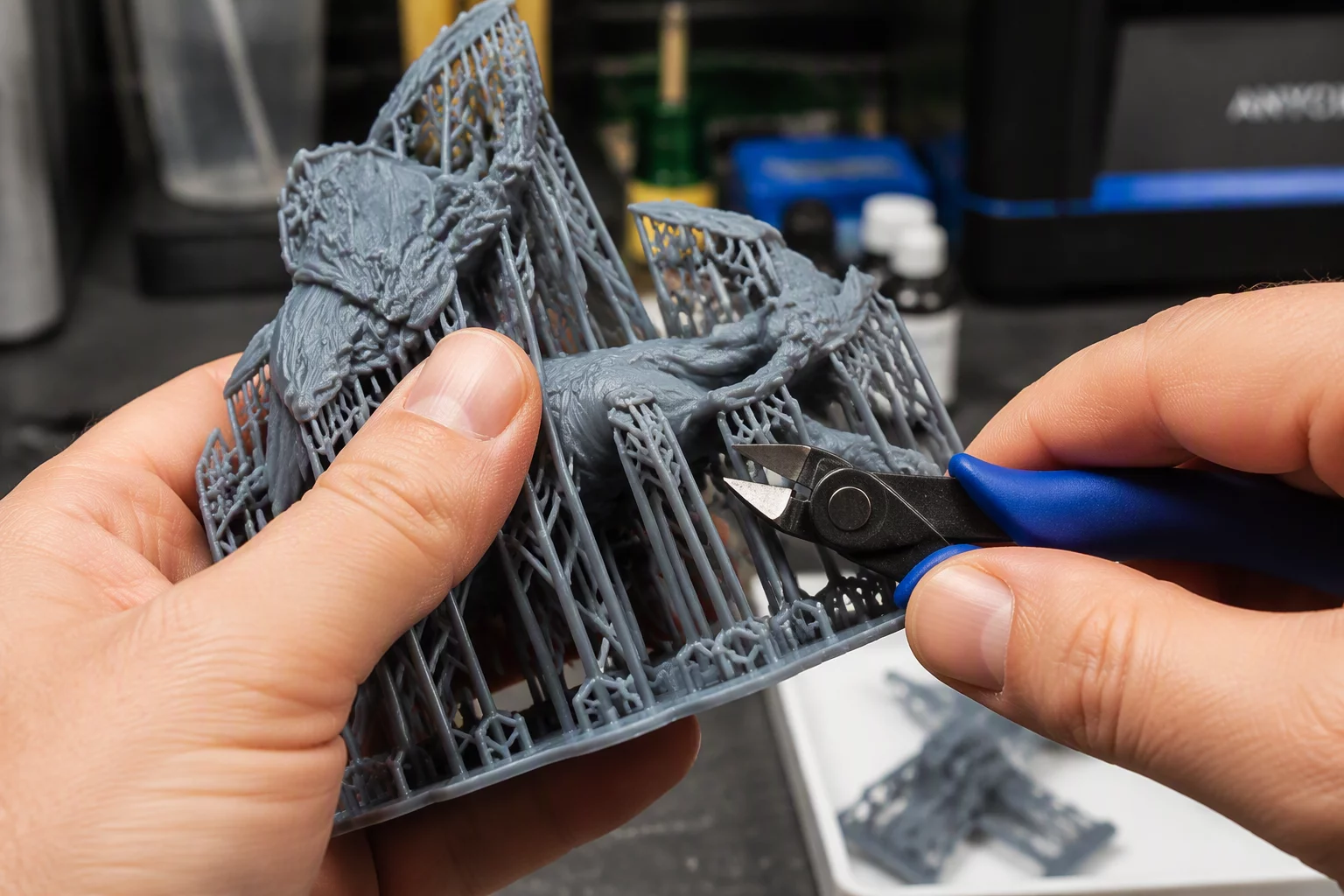
The Real Cost of Post Processing in 3D Printing
Spending forty-five minutes scraping stubborn support material with dental picks and needle-nose pliers quickly erodes the efficiency of rapid prototyping. When interface layers fuse aggressively into the downward-facing surfaces of a part, cleanup turns into a hazardous manual chore prone to gouging the plastic or snapping fragile structural ribs.
Minimizing post-processing duration starts long before the hotend begins extruding material. Calibrating the Z-contact distance, adopting directional interfaces, and tailoring support density in modern slicers transforms stubborn blocks of support scaffolding into crisp structures that peel away in clean, single pulls.
Core Slicer Adjustments for Swift Support Removal
Achieving effortless breakaway interfaces requires balancing mechanical stability during deposition with intentional thermal detachment at the boundary. Implement these key parameters during the slicing stage to minimize interface bonding:
- Set the top interface Z-distance equal to exactly one full layer height (0.20 mm for standard nozzles) to prevent molten strand fusion while preventing unsupported filament sag.
- Adjust interface pattern density between 70% and 80% with a rectilinear grid, which allows the interface skin to flex and release without splintering into micro-fragments.
- Adopt organic tree support branches instead of dense grid pillars; they establish minimal contact footprints and wrap cleanly around complex exterior contours.
Practical Workshop Tweaks and Thermal Release Methods
Allow parts to cool down completely to ambient room temperature before attempting support removal. As thermoplastic polymers cool, differential thermal contraction between the dense model geometry and thin support walls creates micro-fractures along the contact boundaries, making mechanical detachment nearly effortless.
For narrow internal cavities or fragile cantilever overhangs, chilling the printed part in a cold bath for three to five minutes causes the support interface bonds to snap cleanly with gentle finger pressure, reducing the need for aggressive sandpaper scraping or rotary tool deburring.
Reduced interface layer gap to 0.16mm on our PETG prints with organic tree supports. The contact scarring dropped significantly and overhangs at 65° remained crisp with zero sagging. Highly recommend testing the custom peel angle settings!